
Articles
Industry Articles
Read the articles below for more information about non-opioid treatment options for pain.

Cervical sympathetic block, COVID, parosmia, dysgeusia, dysautonomia
One hundred ninety-five patients presenting with post-COVID symptomology, including parosmia and dysgeusia, underwent reversible stellate ganglion blockade. Stellate ganglion blockade was performed at an outpatient facility, and patients were evaluated…
Knee pain, osteoarthritis, ultrasound, radiofrequency denervation
Genicular nerve radiofrequency (RF) denervation appears to be a promising treatment for knee pain in patients with degenerative osteoarthritis of the knee, when candidates are not suitable for arthroplasty. This study aimed to assess the accuracy and reliability of…
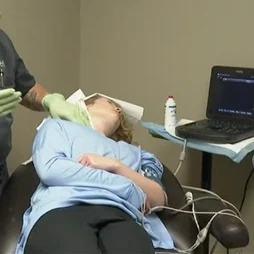
Occipital nerve blocks, pulsed radiofrequency, chronic headaches
Occipital neuralgia is a condition manifested by chronic occipital headaches and is thought to be caused by irritation or trauma to the greater occipital nerve (GON). Treatment for occipital neuralgia includes medications, nerve blocks, and pulsed…
Migraines
Migraine headaches are common, with a worldwide prevalence ranging between 8 and 18%. Migraines cause significant disability, even during periods between attacks, and are responsible for $1 billion in medical costs and $16 billion in lost productivity per year in…
Axillary nerve block, suprascapular nerve block, shoulder joint replacement
A 36-year-old female with severe juvenile rheumatoid arthritis presented for right total shoulder joint replacement. She also had spina bifida with an associated ventriculo-peritoneal shunt coursing along the right side of the neck. She had severe…
Chronic headache, headache management
Physicians have used several interventional techniques to treat primary headaches. While many can be treated pharmacologically, those who continue to suffer from refractory or severe headaches may see tremendous benefit from a range of more invasive…
Headache management, opioids
Although many patients who suffer from headaches can be treated with conservative, less-invasive treatments, there still remains at present an ever-increasing need for those patients who are refractory to conservative measures and thus require interventional…
Chronic migraines, ultrasound, pulsed radiofrequency, occipital nerve
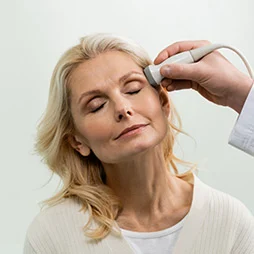
Although various oral medications and procedures are applied for managing migraine, their efficacy remains limited. To control migraine that does not respond to conventional treatments, we conducted pulsed radiofrequency (PRF) stimulation to the greater…

Migraine, SPG, Nerve Block
The sphenopalatine ganglion (SPG) is associated with the trigeminal nerve, the major nerve involved in headache disorders. The mechanism behind migraines is not fully understood, but it’s thought that blocking the SPG may help relieve migraine pain. The…
Nerve blocks, sympathetic blocks
The autonomic nervous system is composed of the sympathetic and parasympathetic nervous systems. The sympathetic nervous system is implicated in situations involving emergent action by the body and additionally plays a role in mediating pain states and…
Knee pain, joint pain, ultrasound
Most routine intra-articular and extra-articular knee infiltrations performed in pain management are carried out by means of blind techniques or fluoroscopy-guided techniques. Alternatively, ultrasound-guided techniques are a safer and more precise…

Postmastectomy pain, breast cancer, serratus plane block, nerve block
Postmastectomy pain syndrome is common after surgical treatment for breast cancer and may be challenging to manage. Currently, there are a wide variety of approaches to treat this type of pain, including medications, physical therapy, and interventional…