
Genicular Nerve Block & Radiofrequency Ablation (RFA)
 Verify My Insurance
 Call 979-703-1426
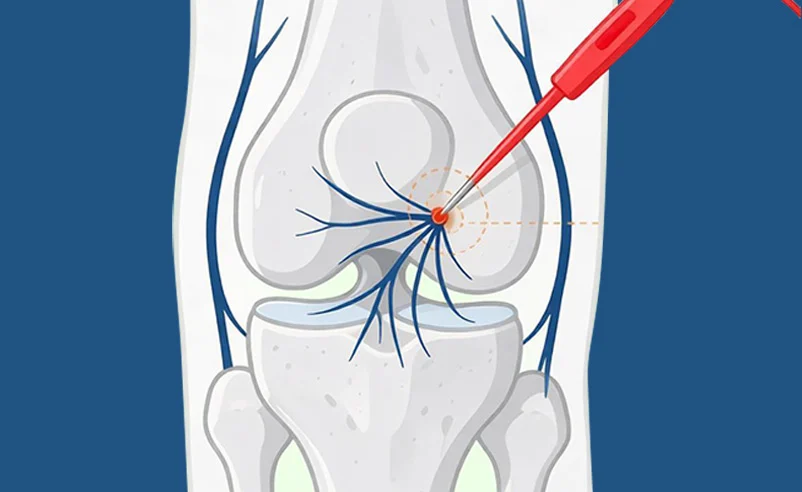
A targeted nerve treatment that can ease chronic knee osteoarthritis pain for 6-12+ months without surgery.
Overview:
The genicular nerves are small sensory nerves around the knee that carry pain signals from an arthritic joint to the brain. A genicular nerve block uses local anesthetic to temporarily numb these nerves, confirming they are the source of knee pain. If the block provides significant relief, radiofrequency ablation (RFA) can then be used to create a longer-lasting interruption of those pain signals. This staged approach is often considered for chronic knee osteoarthritis pain, especially for patients who want to delay or avoid knee replacement surgery.
How It Works:
A diagnostic genicular nerve block is performed first, using fluoroscopic or ultrasound guidance to inject local anesthetic near the genicular nerves surrounding the knee. If this produces meaningful, though temporary, pain relief, RFA is scheduled as a follow-up procedure: a needle electrode is guided to the same nerves and radiofrequency energy heats the tissue to create a controlled lesion that reduces pain transmission. Each visit typically takes about 30-45 minutes and is done with local anesthesia, with light sedation available if needed.
Conditions It Treats:
Knee Osteoarthritis / Pain • Joint Pain
What to Expect:
Most patients go home the same day with only mild soreness at the injection sites for a few days; some notice a brief increase in discomfort during the first 1-2 weeks before the full effect sets in over 2-4 weeks. In appropriately selected patients who responded well to the diagnostic block, RFA has been shown to provide roughly 6-12 months of relief, and sometimes longer, with the option to repeat the procedure as the nerve gradually regenerates.